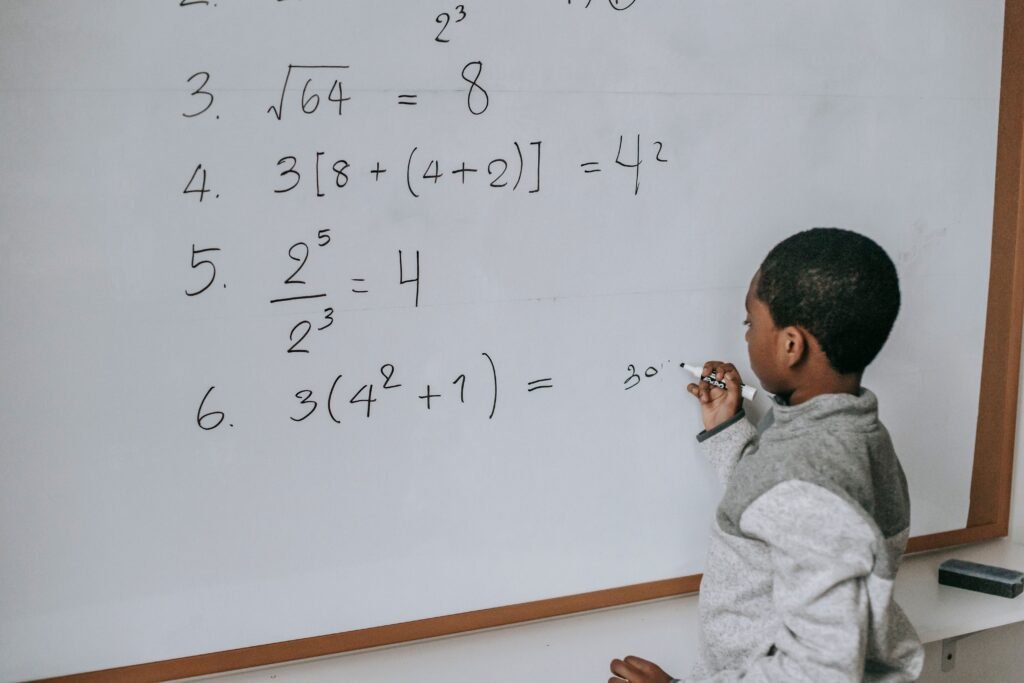
Math homework is supposed to help children practice what they learned in school. But sometimes, homework time turns into something completely different: frustration, raised voices, tears, and a parent wondering, “Why is this so hard?”
If you have ever sat down with your child to help with a math assignment and ended up in an argument, you are not alone.
Math can be frustrating for children, especially when they do not understand the steps involved. It can also be frustrating for parents who want to help but may not remember how they learned fractions, long division, algebra, geometry, or other math skills.
The problem is often not that a child is lazy or that a parent is doing something wrong. Sometimes, the child simply needs math explained in a different way.
Your Child May Not Need More Pressure—They May Need a Different Explanation
When a child struggles with math, adding more pressure does not necessarily make the problem easier.
Sometimes children need to see a problem broken down into smaller steps. They may need to see an example before attempting the problem themselves. They may need to use pictures, numbers, or another method to understand what is happening.
This is particularly important with subjects such as:
Fractions
Decimals
Percentages
Multiplication and division
Long division
Algebra
Factoring
Geometry
Word problems
Pre-algebra
A child who says, “I hate math,” may actually be saying, “I don’t understand math, and I don’t know how to fix it.”
Get Started With Online Math Tutoring Today
Parents Don't Have to Remember Everything They Learned in School
Many parents have been out of school for years or even decades.
You may remember some basic math, but that does not mean you remember exactly how to factor an equation, add fractions with different denominators, solve an algebra problem, or calculate the area of a complicated geometric figure.
And that’s okay.
Math is taught differently today in some classrooms than it was when many parents were students. Your child’s teacher may also use a particular method that is different from the method you learned.
Instead of turning homework into a battle over who is right, it can be helpful to step back and recognize that your child may need additional support.
How Parents Can Make Math Homework Less Stressful
There are several things parents can do to make homework time more productive.
-Take a Break When Everyone Is Frustrated
If you and your child are both becoming frustrated, continuing to argue usually does not make the math easier.
Take a short break and come back to the assignment later.
-Ask Your Child What Part They Understand
Instead of immediately showing your child how to solve the entire problem, ask:
“What part of the problem do you understand?”
This can help identify exactly where the difficulty begins.
-Break the Problem Into Steps
A large math problem can seem overwhelming. Breaking it into smaller steps can make it easier for a child to understand what they are supposed to do.
-Avoid Making Your Child Feel Bad About Math
Statements such as “This is easy” or “You should know this already” can make a struggling child feel embarrassed.
If your child is having difficulty, try to focus on the problem rather than blaming the child.
-Consider Getting Math Homework Help
Sometimes the best solution is to have someone else work with your child.
A math tutor can provide your child with individual attention and explain a concept in a way that makes sense to them. It can also take some of the pressure off parents during homework time.
Get Started With Online Math Tutoring Today
Math Tutoring Can Help Take the Argument Out of Homework
Parents should not have to become their child’s math teacher every night.
If math homework regularly ends with frustration, an argument, or a child saying, “I don’t understand,” additional support may help.
One-on-one math tutoring gives children an opportunity to ask questions, work through problems step by step, and practice skills without the pressure they may feel when they are struggling at home.
The goal isn’t simply to finish tonight’s homework.
The goal is to help your child understand the math so that homework becomes less stressful in the future.
A Math Struggle Doesn't Mean Your Child Can't Learn Math
One difficult homework assignment does not determine your child’s ability to learn math.
Children learn at different speeds and in different ways. Sometimes they simply need more time, more practice, or an explanation that connects with the way they learn.
If math homework has become a source of stress in your household, you don’t have to keep fighting the same battle every night.
The right support can help your child build understanding, confidence, and better math skills—one problem at a time.
Need Math Homework Help for Your Child?
If your child is struggling with math, one-on-one tutoring can provide the extra support they need to understand challenging concepts and build confidence.
Contact Jodi Online Tutoring Math to learn more about online math tutoring for your child.
- Monthly Math Tutoring Packages Available
- Save with Consistent Monthly Tutoring
- Simple, Affordable Package Pricing for Families
- Easy Online Enrollment & Scheduling
Give Your Child the Extra Math Support They Need
With patient, personalized online tutoring, your child can strengthen essential math skills, work through challenging concepts, and build the confidence to succeed in school.