Here’s What Parents Can Do
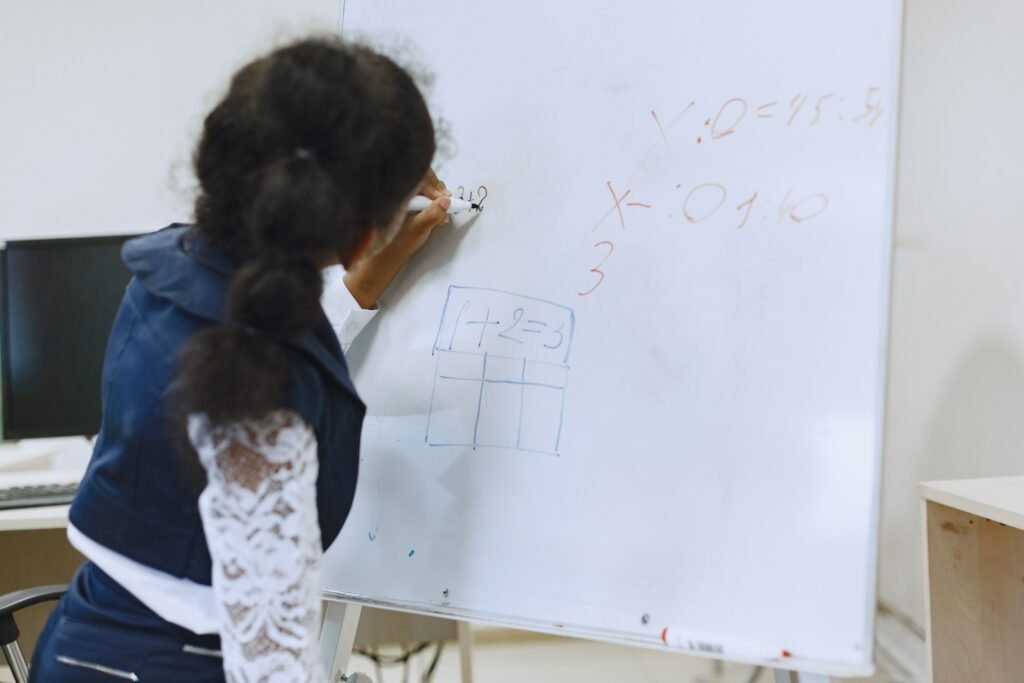
Is your child falling behind in math? If math grades are dropping, homework is becoming frustrating, or your child keeps saying, “I don’t understand,” it may be time to take a closer look.
A child falling behind in math does not necessarily mean they cannot learn. Often, children need more individualized instruction, additional practice, or a different explanation of the math concepts they are struggling to understand.
The good news is that math help for children is available, and getting support early can make a difference.
Why Is Your Child Falling Behind in Math?
Math is a subject where skills build on previous skills. When a child misses an important concept, the next lesson can become more difficult.
For example, a child who struggles with multiplication may later have difficulty with fractions. A student who does not understand fractions may struggle with decimals, percentages, ratios, and eventually algebra.
Some common reasons a child may be falling behind in math include:
- Missing important math skills
- Difficulty understanding classroom instruction
- Not getting enough practice
- Trouble remembering math facts
- Difficulty solving word problems
- Math homework becoming overwhelming
- Lack of confidence
- Moving to new concepts before mastering previous ones
The first step is to determine which math skills your child needs help with.




Signs Your Child May Be Falling Behind in Math
Sometimes parents don’t realize there is a problem until the report card arrives.
However, there are often warning signs at home.
Your child may be falling behind in math if they:
- Avoid doing math homework
- Become frustrated when solving problems
- Take much longer than expected to finish assignments
- Frequently say, “I don’t understand”
- Guess answers instead of showing their work
- Have difficulty explaining how they solved a problem
- Forget skills they previously learned
- Receive consistently low math grades
- Become nervous before math tests
- Say they are “bad at math”
One difficult test does not necessarily mean your child needs tutoring. But repeated struggles should not be ignored.
Math Learning Gaps Can Grow Over Time
One of the reasons early math support is important is that math concepts are connected.
A student may be able to memorize a procedure without fully understanding why it works. When the problems become more complicated, that lack of understanding can become apparent.
For example, a student might learn how to add fractions with the same denominator but struggle when different denominators are introduced.
Instead of simply giving the student more problems, it may be necessary to go back and strengthen the underlying skill.
Finding the gap is often the first step toward closing it.
What Can Parents Do When a Child Is Falling Behind in Math?
If your child is struggling, don’t immediately assume they need hours of additional homework.
Start by asking questions.
What part of the assignment is difficult?
Does your child understand the vocabulary?
Can they explain the first step?
Are they making the same type of mistake repeatedly?
Has the problem been happening for several weeks or only recently?
You can also speak with your child’s teacher to learn which skills need additional attention.
If the problem continues, personalized math tutoring may provide the extra support your child needs.
How Online Math Tutoring Can Help
Online math tutoring gives your child an opportunity to receive individual attention outside of the regular classroom.
Instead of trying to keep up with an entire class, your child can work through challenging concepts at a pace that is easier to manage.
Tutoring sessions can focus on:
- Math fundamentals
- Fractions
- Decimals
- Percentages
- Ratios and proportions
- Pre-algebra
- Algebra I
- Math homework
- Test preparation
- Reviewing previously learned skills
The goal is not simply to complete homework.
The goal is to help your child understand math and become more confident solving problems independently.
What If Your Child Is Too Shy to Ask for Help?
Some children understand that they are confused but don’t feel comfortable raising their hand in class.
They may worry about giving the wrong answer or asking a question that other students already understand.
One-on-one tutoring provides a different environment.
Your child has an opportunity to ask questions, make mistakes, and try again without having to worry about keeping up with the rest of the class.
For some students, that additional individual attention can help rebuild their confidence.
Don't Wait Until Your Child Is Failing
Parents sometimes wait until a child’s math grade becomes an F before looking for help.
But your child does not have to reach that point.
If you notice that math homework is becoming a daily struggle or your child’s grades are steadily declining, consider addressing the problem now.
Early support can help identify areas of difficulty before learning gaps become larger.
Your Child Can Improve With the Right Support
A child falling behind in math is not a hopeless situation.
Children can learn difficult concepts when they receive instruction that meets their individual needs.
The process may take patience and consistent practice, but improvement can begin with one skill at a time.
Your child does not need to become a math expert overnight.
They need to understand the next concept, practice it, and build from there.
Is Your Child Falling Behind in Math?
If your child is struggling with math, don’t wait for another frustrating homework night or another disappointing report card.
A personalized approach can help identify where your child is having difficulty and provide focused support.
Let’s identify the math skills your child needs to strengthen and work toward better understanding, stronger skills, and greater confidence.
Ready to Get Started?
Schedule a math assessment today and find out where your child needs additional math support.
Online math tutoring is available for students who need help catching up, strengthening their math skills, completing homework, or preparing for Algebra I.